Kitchen Sink Backs Up When Running Garbage Disposal? What Lafayette Homeowners Should Know
If your kitchen sink backs up when running garbage disposal, the problem is usually not the disposal alone. In many Lafayette homes, this symptom points to a partial kitchen drain clog, trapped food waste, grease buildup, poor disposal drainage, or a plumbing issue farther down the line.
Thank you for reading this post, don't forget to subscribe!The disposal may still turn on and grind, but the drain cannot move water and food particles away fast enough. For homeowners in Lafayette, West Lafayette, Dayton, Shadeland, Buck Creek, and nearby Indiana communities, kitchen sink backups can become more than an inconvenience. Standing water, cloudy backup, food debris, odors, and repeated clogs can all point to a kitchen plumbing problem that needs professional attention.
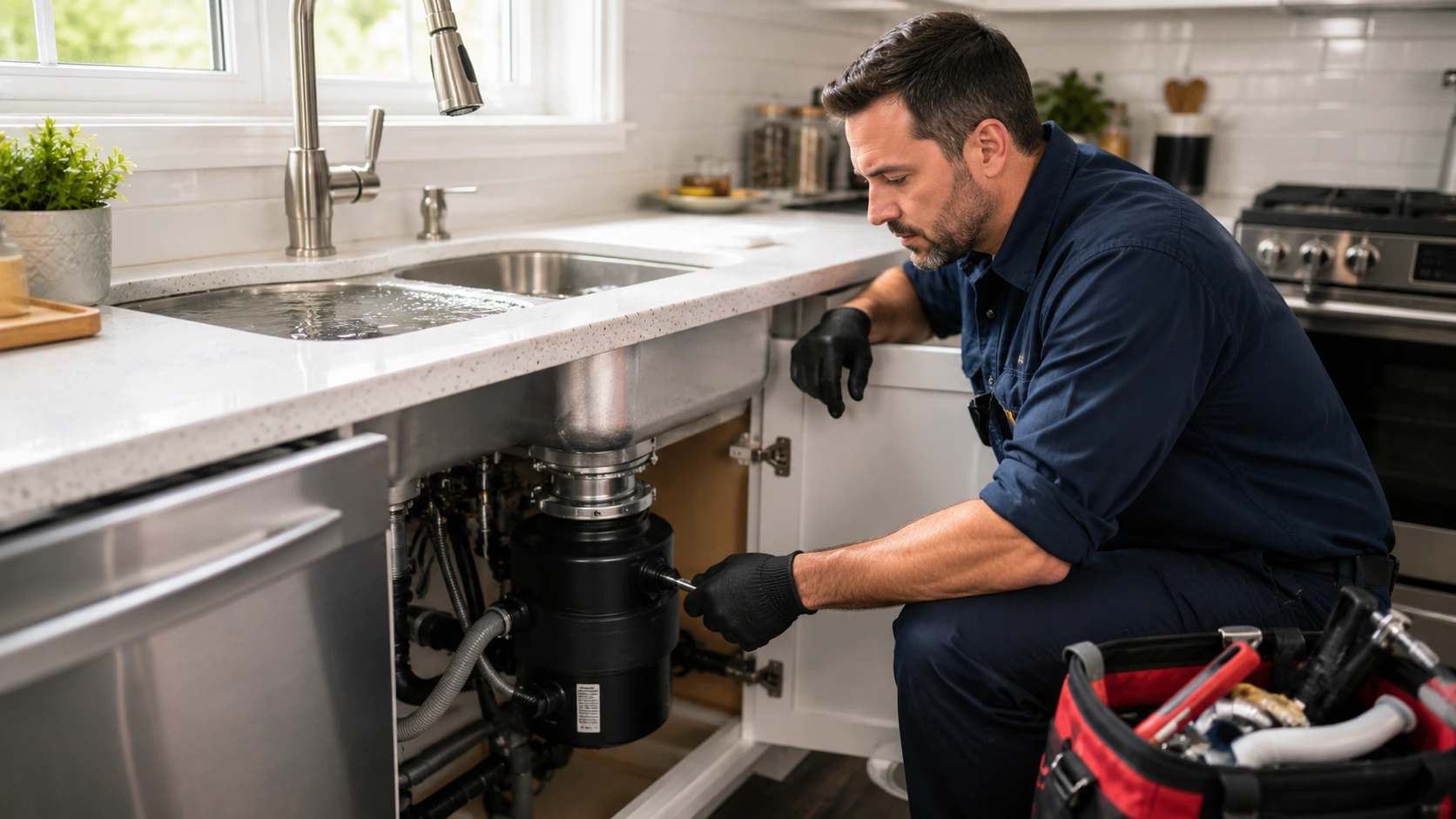
A kitchen sink backup often points to a drain restriction, food waste buildup, or disposal-related plumbing issue.
Quick Answer: Why Does the Kitchen Sink Back Up When the Disposal Runs?
A kitchen sink usually backs up when the garbage disposal runs because the disposal is pushing water and ground food into a drain line that is already restricted. Common causes include grease buildup, food particles trapped in the P-trap, disposal overload, dull or jammed grinding components, a clogged kitchen branch drain, or a shared drain issue with the dishwasher.
If the backup keeps happening, professional kitchen and bath plumbing service can identify whether the real issue is the disposal, the trap, the kitchen drain, or a deeper plumbing blockage.
Key Takeaways
- A running disposal can expose a hidden drain restriction because it sends water and food waste into the line quickly.
- Grease, starches, coffee grounds, fibrous foods, and heavy food scraps are common kitchen drain clog contributors.
- If both sides of a double sink back up, the clog is likely in the shared drain or trap area.
- If the sink drains slowly even when the disposal is off, the problem may be deeper than the disposal unit.
- Recurring backups should be checked before they turn into water damage, cabinet damage, or a larger drain cleaning problem.
- Disposal issues and kitchen drain clogs can feel similar, but they do not always require the same repair.
How a Garbage Disposal Can Make a Hidden Drain Problem Obvious
A garbage disposal does not make food disappear. It grinds food into smaller pieces and sends those particles into the kitchen drain with water. If the drain line is clear, the water and food waste move through the trap and into the plumbing system. When the line is restricted, that same water and waste has nowhere to go fast enough, so it rises back into the sink.
This is why a sink may seem fine until the disposal turns on. The disposal creates a sudden rush of water, movement, and ground debris. A partially clogged pipe may handle slow faucet flow but fail when the disposal sends more volume through the drain.
That is also why repeated disposal backups should not be ignored. The disposal may be working exactly as designed while the drain line is the part that needs service. In other cases, the disposal itself may be clogged, jammed, improperly draining, or connected to a dishwasher hose that is contributing to the backup.
Common Reasons a Kitchen Sink Backs Up When the Disposal Runs
Drain Restriction
Food, grease, and debris may already be narrowing the kitchen drain line before the disposal turns on.
Disposal Overload
Too much food waste at once can overwhelm the disposal and push debris into the drain.
Shared Sink Backup
Double-bowl sinks often back up on the opposite side when the shared drain path is blocked.
Food Waste Is Trapped in the P-Trap
The P-trap is the curved pipe beneath the sink. It holds water to block sewer gases, but it can also catch food scraps, grease, and debris. When the trap is partially clogged, running the garbage disposal can push water into the restriction faster than the pipe can drain.
Signs of a trap-area clog include slow draining, gurgling, standing water in one sink bowl, or cloudy water coming back up after the disposal runs. If the clog is minor, it may seem to clear temporarily, then return after the next heavy use.
Grease Has Built Up Inside the Kitchen Drain
Grease is one of the most common causes of kitchen sink drainage problems. Hot grease may look liquid when it goes down the drain, but it cools, sticks to the pipe walls, and catches food particles over time. A disposal cannot remove grease from the plumbing system. It only moves the grease farther into the drain line.
The U.S. EPA advises homeowners not to pour cooking oil or grease down drains because these materials can contribute to clogs and drainage problems. You can review the EPA’s household drain-care guidance here: EPA guidance on caring for household drain systems.
Pro Tip: Let grease cool, place it in a disposable container, and throw it away instead of rinsing it into the sink or garbage disposal.
The Disposal Is Being Overloaded
A garbage disposal should handle small amounts of soft food waste with plenty of running water. It is not designed to replace a trash can. Large amounts of food, thick leftovers, peelings, and fibrous scraps can overwhelm the disposal and drain line.
When too much food is pushed through at once, the disposal may grind unevenly, leave particles too large, or force debris into a drain that is already partly restricted. That combination often leads to backup in the sink bowl.
Starchy Foods Are Expanding in the Drain
Pasta, rice, potatoes, and similar starchy foods can swell, clump, and create a thick paste inside the drain. Even after grinding, these materials can collect in bends, trap arms, and areas where grease is already present.
This type of clog can be frustrating because water may eventually drain, making the problem seem temporary. Then the next disposal use pushes more food into the same restricted area and the sink backs up again.
Fibrous Food Waste Is Wrapping Around the Disposal
Celery, onion skins, corn husks, artichokes, asparagus ends, and similar fibrous scraps can wrap around disposal components or create stringy clumps in the drain. These materials do not always break down cleanly, especially in older disposal units.
If the disposal hums, drains poorly, smells bad, or struggles after fibrous food waste goes down, the unit may need inspection. Lickity Split Plumbing provides garbage disposal service for homeowners dealing with clogs, leaks, jams, drainage issues, and disposal replacement concerns.
The Kitchen Branch Drain Is Clogged Farther Down the Line
Sometimes the clog is not directly under the sink. The restriction may be farther down the kitchen branch drain, where the sink line connects into the rest of the plumbing system. In that case, cleaning only the visible trap may not solve the problem.
Signs of a deeper kitchen drain clog include repeated backups, bad odors, water returning after it seemed to drain, or multiple nearby fixtures draining slowly. If this sounds familiar, professional drain cleaning services may be the better solution.
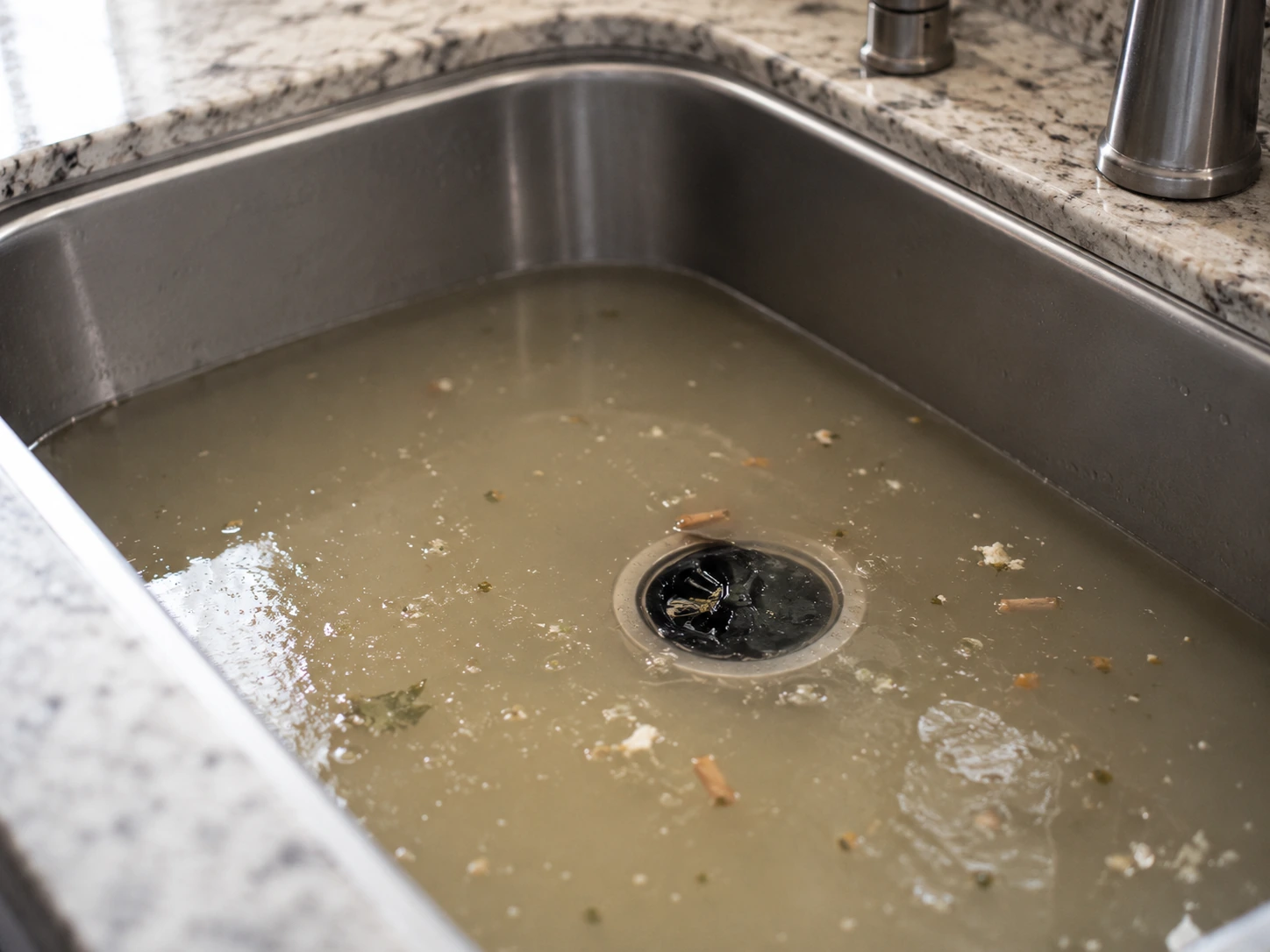
Cloudy water, food debris, and repeat backups are signs the drain may be restricted beyond the disposal opening.
What If One Side of the Sink Backs Up Into the Other Side?
In many Lafayette kitchens, the garbage disposal is installed on one side of a double-bowl sink. Both bowls usually share a drain connection before wastewater exits into the wall or floor. If the disposal side sends water into the other bowl, the shared drain path is likely restricted.
This often happens when the trap, baffle tee, waste arm, or branch line is clogged. The disposal pushes water into the shared drain, but the restriction blocks normal flow. The water then takes the easiest path back up, which may be the other sink bowl.
This symptom usually means the problem is not just surface-level food debris. It may need proper disassembly, cleaning, augering, or drain service. Pouring chemicals into the drain can create additional risk, especially if the sink is already holding standing water.
What Not to Put Down a Garbage Disposal
Many kitchen sink backups start with normal daily habits. A disposal can be useful, but it still needs the right materials and enough water flow. To reduce the chance of another clog, avoid putting these items into the disposal:
- Cooking grease, oil, bacon fat, and pan drippings
- Pasta, rice, potatoes, oatmeal, and other starchy foods
- Coffee grounds
- Eggshells in large amounts
- Celery, onion skins, corn husks, and fibrous vegetables
- Bones, fruit pits, seafood shells, and hard scraps
- Large amounts of food at one time
- Non-food items, packaging, paper, plastic, or utensils
Use cold water while the disposal runs, feed small amounts slowly, and let water continue running briefly after grinding. For everyday cleanup, scrape plates into the trash before rinsing dishes in the sink.
Important: If the sink is already backed up, avoid running the disposal repeatedly. That can push more water into the clog, worsen the backup, or send dirty water into the other sink bowl.
Do You Need Garbage Disposal Repair or Drain Cleaning?
The right service depends on where the problem is happening. A disposal issue and a drain issue can feel similar from the sink, but they are not the same repair. Here is a simple way to think through the symptoms.
| Symptom | Likely Issue | Best Next Step |
|---|---|---|
| Disposal hums but does not grind | Possible jammed disposal | Schedule garbage disposal inspection |
| Disposal runs but water backs up | Partial kitchen drain clog | Check kitchen drain and trap area |
| Both sink bowls fill with water | Shared drain restriction | Professional kitchen drain cleaning |
| Bad odor comes from the drain | Food buildup, grease, or stagnant debris | Drain and disposal cleaning or inspection |
| Backup keeps returning | Deeper branch drain issue | Drain cleaning or plumbing repair evaluation |
If the disposal is old, leaking, frequently jamming, or unable to grind properly, it may be time to review whether repair or replacement makes more sense. Lickity Split Plumbing also has a related guide on when to replace a garbage disposal in Lafayette.
If the disposal works but the drain keeps clogging, the better next step may be drain cleaning. You can also read more about recurring clogs here: why your drain keeps clogging in Lafayette, IN.
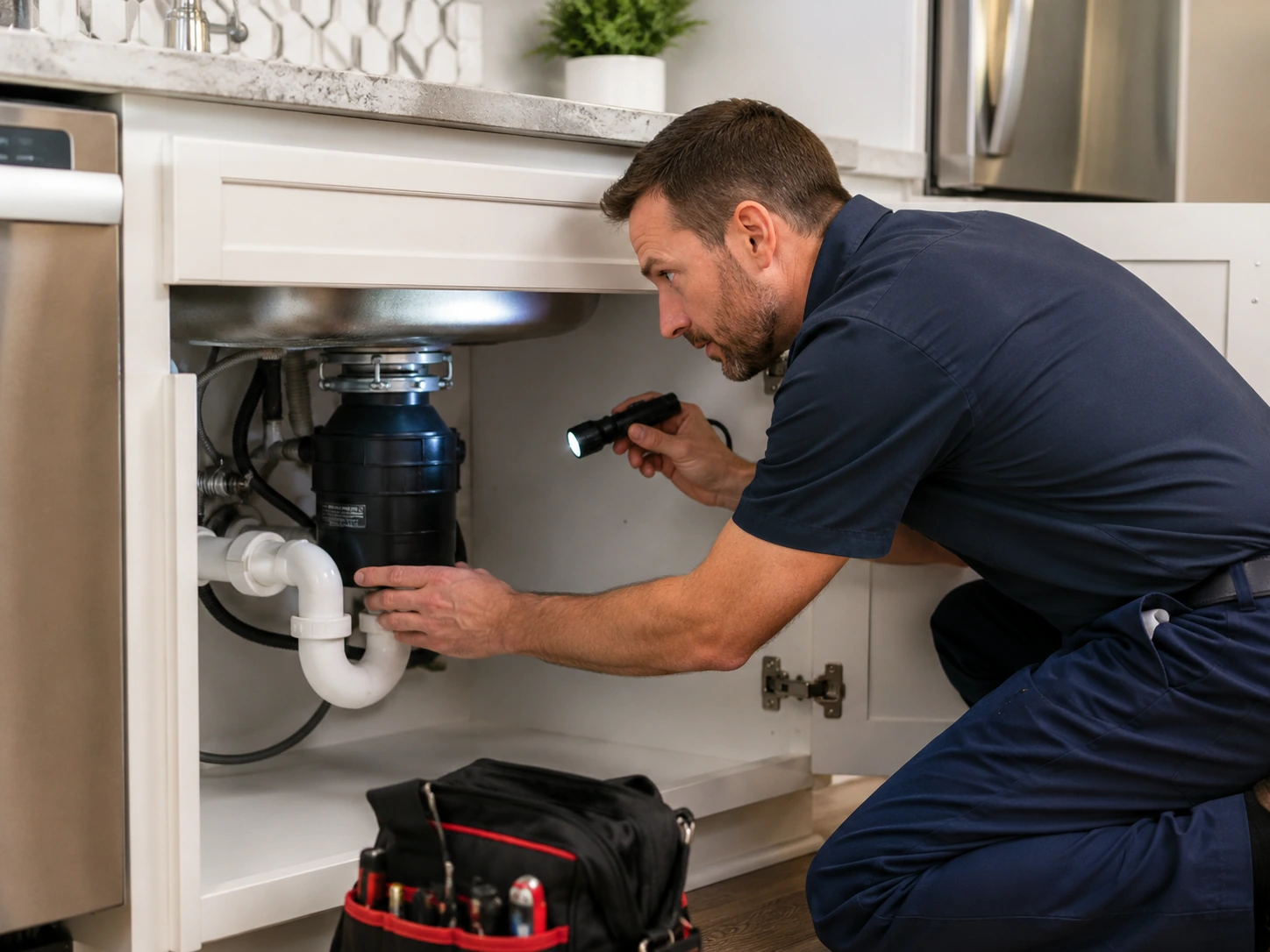
A plumber can inspect the disposal, P-trap, branch drain, dishwasher connection, and nearby plumbing to find the true source of the backup.
Why Kitchen Sink Backups Should Be Fixed Early
A small kitchen sink backup can become a larger plumbing issue if the cause is ignored. Food waste and grease can continue building inside the pipe. Standing water can leak into cabinets. Bad odors can spread through the kitchen. Repeated plunging or chemical drain cleaner use may also create more stress on older plumbing connections.
In some homes, a kitchen sink backup is connected to a larger drain restriction. If multiple drains are slow, the toilet gurgles, or water backs up elsewhere, the issue may not be limited to the kitchen. In that situation, a plumber may recommend deeper drain evaluation or plumbing repair.
Fixing the issue early helps protect cabinets, flooring, disposal components, and drain piping. It also helps homeowners avoid the cycle of clearing a clog temporarily only for it to return days or weeks later.
When Lafayette Homeowners Should Call a Plumber
Call a plumber if your kitchen sink backs up when running the garbage disposal and the issue happens more than once. A single slow drain may be caused by minor buildup, but repeated backup usually means the line needs proper attention.
Call for service if you notice any of these signs:
- Water rises into the other sink bowl when the disposal runs
- The sink drains slowly even when the disposal is off
- The disposal hums, jams, leaks, or shuts off
- Cloudy water or food debris comes back up
- There is a sewer-like or rotten food odor from the drain
- The clog returns after plunging or home cleaning attempts
- The dishwasher drains into the sink unexpectedly
- More than one drain in the home is slow or gurgling
Lickity Split Plumbing can inspect the disposal, check the trap and kitchen drain, determine whether the blockage is local or deeper in the plumbing system, and recommend the right repair. For kitchen sink backups, disposal problems, drain restrictions, and fixture-related plumbing issues, start with kitchen and bath plumbing service.
How to Help Prevent the Problem From Coming Back
After the sink is draining properly again, prevention matters. Most kitchen drain problems are caused by repeated buildup over time, not one single mistake. A few small habits can reduce the chance of future backups.
- Scrape plates into the trash before rinsing dishes.
- Never pour grease, oil, or fat into the sink or disposal.
- Run cold water before, during, and briefly after disposal use.
- Feed food waste slowly instead of forcing large amounts at once.
- Keep fibrous, starchy, and hard materials out of the disposal.
- Schedule service if slow draining becomes a recurring pattern.
If a kitchen drain has already built up grease and debris, prevention alone may not clear the existing restriction. That is where professional drain cleaning can help restore flow and reduce repeat backups.
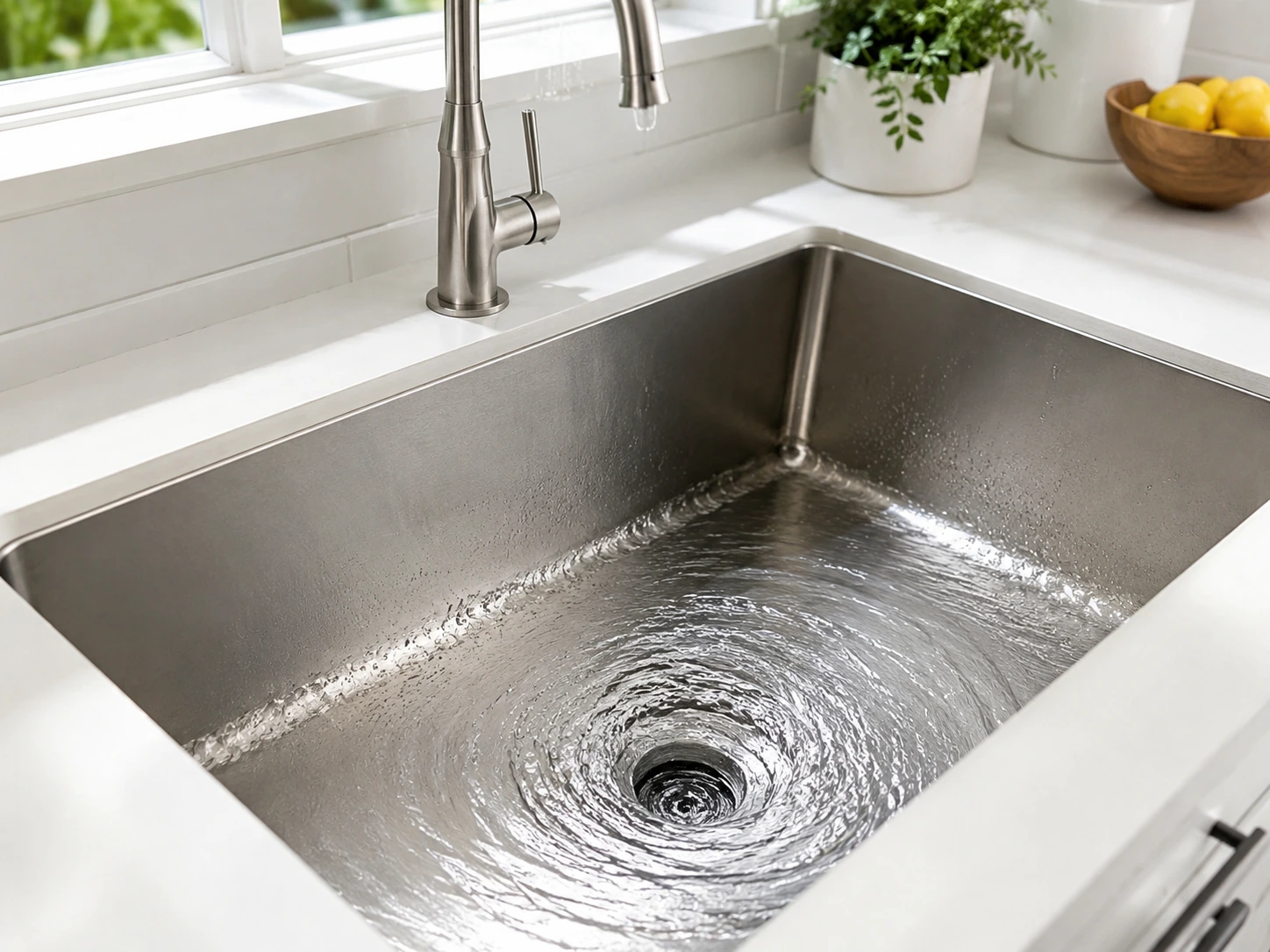
Once the drain is clear and the disposal is working properly, the sink should drain smoothly without water backing up.
Get Help With a Kitchen Sink Backup in Lafayette, IN
If your kitchen sink backs up when running garbage disposal, do not keep forcing water and food waste into the drain. The problem may be a clogged trap, blocked kitchen drain, disposal issue, or deeper plumbing restriction. Lickity Split Plumbing helps Lafayette-area homeowners find the source of the backup and fix it properly.
Schedule kitchen and bath plumbing service or visit the garbage disposal service page for help with disposal clogs, leaks, jams, backups, and replacement concerns.
FAQ: Kitchen Sink Backs Up When Running Garbage Disposal
Why does my kitchen sink back up when I run the garbage disposal?
Your kitchen sink usually backs up when the disposal runs because the drain line is partially clogged. The disposal pushes water and food debris into the pipe, but the restriction prevents normal flow, so water returns to the sink.
Can a garbage disposal clog the sink drain?
Yes. A disposal can contribute to a sink drain clog when too much food, grease, starch, fibrous material, or hard debris is sent through it. The disposal may still turn on, but the drain may not be clear enough to move the waste away.
Why does water come up the other side of my double sink?
Water comes up the other side of a double sink when the shared drain connection is blocked or restricted. The disposal forces water into the shared drain, and the water backs up through the other sink bowl because it cannot flow out normally.
Should I use chemical drain cleaner for a backed-up kitchen sink?
It is better to avoid chemical drain cleaners, especially when standing water is present. Harsh chemicals may not remove the actual blockage and can create safety concerns. A plumber can check whether the clog is in the trap, disposal, or deeper drain line.
How do I know if the disposal or the drain is the problem?
If the disposal hums, jams, leaks, or fails to grind, the disposal may be the problem. If the disposal runs but water backs up or both sink bowls fill, the drain line is more likely restricted.
What foods should not go into a garbage disposal?
Avoid grease, oil, pasta, rice, potato peels, coffee grounds, eggshells in large amounts, bones, fruit pits, celery, onion skins, corn husks, and large amounts of food waste. These materials can clog the disposal or kitchen drain.
When should I call a plumber for a kitchen sink backup?
Call a plumber when the backup happens repeatedly, water comes up the other sink bowl, the disposal leaks or jams, the drain smells bad, or the sink drains slowly even when the disposal is off.
Can Lickity Split Plumbing help with garbage disposal and kitchen drain problems?
Yes. Lickity Split Plumbing helps Lafayette-area homeowners with garbage disposal issues, kitchen sink backups, drain cleaning, kitchen plumbing repair, and related plumbing problems.
