When Should You Replace a Garbage Disposal?
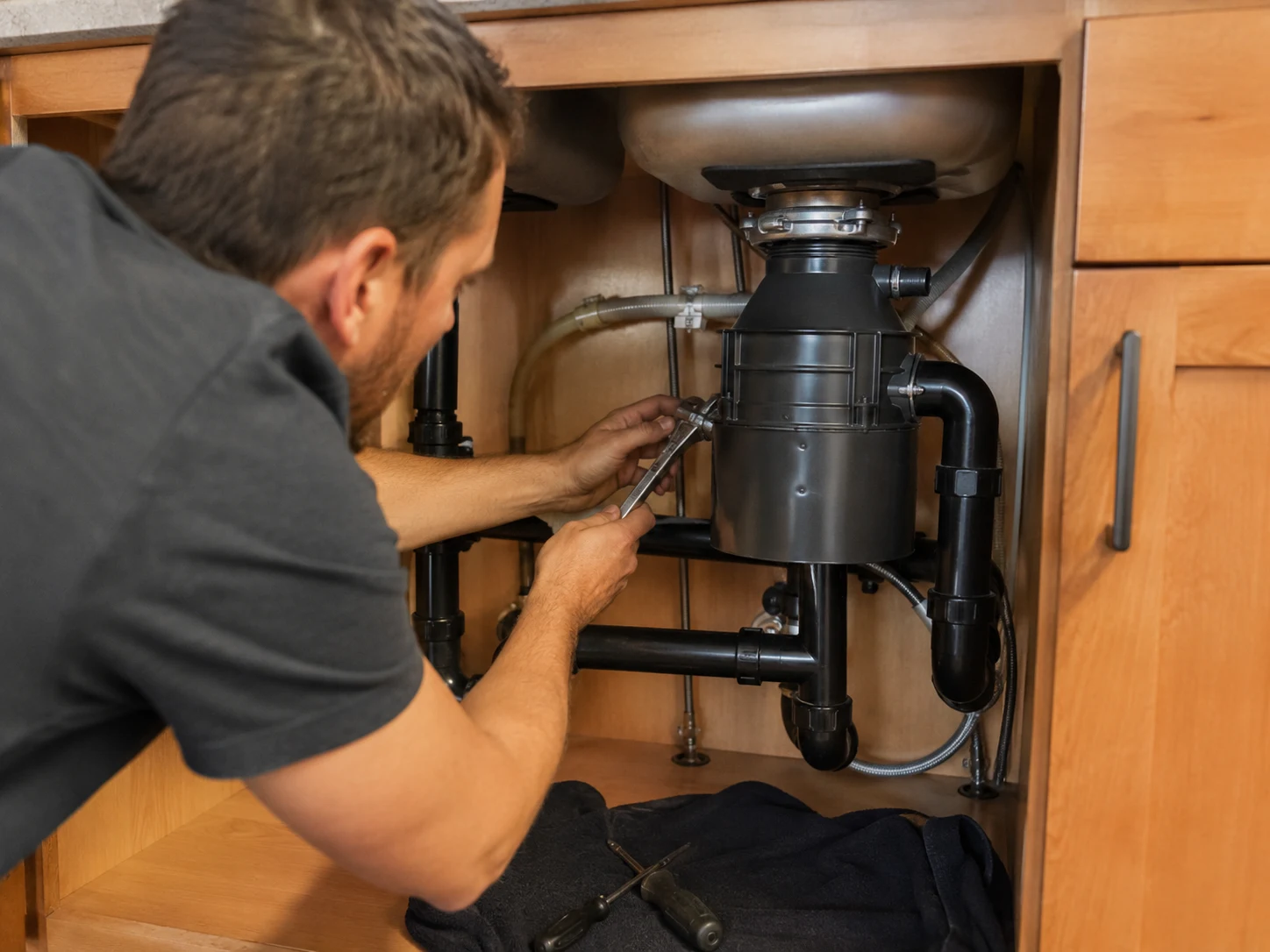
Replace garbage disposal Lafayette IN is a common search when a kitchen disposal starts humming, leaking, smelling bad, draining slowly, tripping the reset button, or refusing to grind food waste the way it used to. A garbage disposal is a convenient kitchen appliance, but it also connects directly to the sink drain and under-sink plumbing. When it fails, the issue can affect more than food scraps. It can create kitchen sink clogs, leaks under the cabinet, unpleasant odors, and repeated plumbing problems.
Thank you for reading this post, don't forget to subscribe!Some garbage disposal problems can be repaired. A jam, loose connection, tripped reset button, or small obstruction may not require replacement. But when the unit is old, leaking from the body, repeatedly jamming, making grinding noises, smelling even after cleaning, or no longer helping the sink drain properly, replacement may be the more practical option.
This guide explains the warning signs that a garbage disposal may need replacement, when repair may still make sense, what homeowners should avoid putting down the disposal, how disposal problems connect to drain clogs, and when to call a plumber for kitchen plumbing service.
Quick Answer
You may need to replace a garbage disposal if it leaks from the unit body, hums but will not spin, jams repeatedly, smells bad even after cleaning, drains slowly, makes loud grinding noises, trips the reset button often, or no longer handles normal kitchen use. Repair may still make sense if the issue is a simple jam, loose connection, reset issue, or drain connection problem.
If the disposal itself is failing, garbage disposal service in Lafayette can help determine whether repair or replacement is the better option. If the problem involves the sink drain, trap, dishwasher connection, or under-sink plumbing, kitchen and bath plumbing service may also be needed.
Why a Working Garbage Disposal Matters
A garbage disposal helps manage small food scraps during kitchen cleanup, but it should not be treated like a trash can. The disposal grinds certain food waste into smaller particles so they can move through the drain line with water. When the unit is working properly, it can make cleanup easier. When it is not working properly, it can become a source of clogs, odors, leaks, and under-sink mess.
The disposal sits between the sink opening and the drain plumbing. That means a disposal problem can look like a sink problem, and a sink problem can look like a disposal problem. If the sink drains slowly after the disposal runs, the issue may be inside the unit, the trap, the drain line, or farther down the plumbing system.
Homeowners often notice garbage disposal trouble during daily routines. The unit may hum but not spin. The sink may fill with cloudy water. Food waste may come back up. Water may drip inside the cabinet. The kitchen may smell even after the sink is cleaned. These symptoms should not be ignored because the problem can worsen with continued use.
A disposal also affects connected fixtures. In many kitchens, the dishwasher drain hose connects near the disposal. If the disposal or drain connection is clogged, dishwasher drainage can also be affected. That is why kitchen disposal service should consider the full under-sink setup, not only the motor.
The best approach is to look at the pattern. One jam may be fixable. Repeated jams, leaks, odors, and reset problems usually mean the unit should be inspected before it creates a larger kitchen plumbing issue.
Replace Garbage Disposal Lafayette IN: 7 Serious Signs
Replace garbage disposal Lafayette IN becomes a stronger consideration when the warning signs point beyond a simple jam. The first serious sign is leaking from the body of the disposal. A leak from a pipe connection or mounting area may be repairable, but a leak from the disposal housing often means the unit itself is failing.
The second sign is frequent jamming. A disposal can jam if hard objects, fibrous scraps, or inappropriate materials enter the chamber. If jams happen again and again even with careful use, the blades, motor, or internal components may be worn or damaged.
The third sign is humming without grinding. A hum usually means the unit is receiving power but the grinding plate is not spinning. This may happen because of a jam, motor issue, or internal failure. If the unit hums and then shuts off or trips the reset button repeatedly, it should be checked.
The fourth sign is persistent odor. Food particles can get trapped inside the disposal, splash guard, drain line, or trap. Cleaning may help if the issue is surface residue. If the smell keeps returning, the unit may have buildup that is difficult to remove, or the drain line may need attention.
The fifth sign is slow draining after disposal use. If water backs up in the sink, drains slowly, or rises when the disposal runs, the problem may be a clog inside the unit, the trap, or the kitchen drain line. Replacement may be needed if the disposal is part of the restriction, but drain cleaning may also be required.
The sixth sign is loud grinding, rattling, or metal-like noise. Sometimes a small object is inside the unit and can be removed safely by a professional. Other times, internal parts are damaged or worn. Continued use can make the issue worse.
The seventh sign is repeated reset button trips. The reset button is there to protect the motor. If it trips once because of a jam, that may be understandable. If it trips often, the motor may be overheating, overloaded, or failing.
Helpful answer: If a garbage disposal leaks from the unit, jams repeatedly, smells bad after cleaning, hums without spinning, or keeps tripping the reset button, replacement should be discussed instead of repeatedly forcing the unit to run.
Garbage Disposal Repair vs Replacement
Garbage disposal repair may be enough when the problem is simple and the unit is still in good condition. A jammed disposal, tripped reset button, loose mounting assembly, leaking drain connection, or dishwasher knockout issue may be repairable without replacing the entire unit. The key is confirming that the motor and body of the disposal are still reliable.
Repair is usually more reasonable when the disposal is not very old, has not had repeated problems, and does not leak from the housing. If the issue happened after a specific item entered the disposal, removing the obstruction and checking the unit may solve the problem.
Replacement makes more sense when the unit is worn out, cracked, corroded, leaking from the body, unreliable, or no longer worth repairing. A disposal that has repeated motor trouble or continues to jam after careful use may not be a good candidate for another repair.
Homeowners should also consider how the disposal fits the kitchen’s daily use. A low-powered unit may struggle in a busy kitchen. If the household cooks often and relies on the disposal regularly, replacing an old or weak unit with a properly selected model may reduce frustration.
The under-sink plumbing should also be checked during the decision. Sometimes the disposal is blamed when the drain line is the actual problem. Other times, the disposal is failing and causing the sink to drain poorly. A plumber can separate appliance trouble from drain trouble.
Helpful answer: Repair is practical for isolated problems. Replacement is usually better when the unit is leaking, old, unreliable, or repeatedly causing kitchen sink problems.
How a Bad Disposal Can Affect Kitchen Sink Drains
A garbage disposal problem can easily turn into a drain problem. When food waste is not ground properly, larger particles can enter the drain and collect in the trap or pipe. Grease, starches, coffee grounds, rice, pasta, eggshells, and fibrous foods can make the problem worse because they can collect or expand inside the line.
Kitchen sink clogs often form gradually. At first, the sink may drain a little slower than usual. Then water may begin standing in the basin after the disposal runs. Eventually, both sides of a double sink may back up, or dirty water may rise into the sink when the dishwasher drains.
If the disposal is working but the sink still drains slowly, the problem may be beyond the unit. The trap, branch drain, or deeper kitchen drain line may need cleaning. In that case, professional drain cleaning services in Lafayette may be needed along with disposal service.
Homeowners should not keep running the disposal when water is not draining. This can push more food waste into a restricted line and make the clog worse. If the sink is already backing up, stop using the disposal and avoid sending additional water and scraps into the drain.
A failing disposal can also create odors because food particles remain trapped instead of being flushed away. Sometimes cleaning the splash guard and chamber helps. But if odor comes with slow drainage, the issue may be deeper in the drain line.
Helpful answer: If replace garbage disposal Lafayette IN comes up because the kitchen sink keeps backing up, the disposal and the drain line should both be evaluated before deciding on replacement alone.
What Not to Put Down a Garbage Disposal
A garbage disposal is useful, but it has limits. It should not be used for grease, cooking oil, fat, coffee grounds, pasta, rice, eggshells, bones, fruit pits, onion skins, corn husks, celery, potato peels, large food scraps, paper, plastic, wipes, or non-food materials. These items can jam the disposal, dull the grinding components, or contribute to drain clogs.
Grease is one of the biggest kitchen drain concerns. Warm grease may seem harmless when it is liquid, but it can cool and stick inside pipes. Once grease coats the line, it can trap food particles and create repeated clogs. The City of Lafayette provides household hazardous waste information for Lafayette residents, and cooking oil is listed among accepted materials. That is a better direction than pouring oil into the sink or disposal.
The EPA’s sanitary sewer overflow information explains that fats, oils, grease, wipes, and other household products can contribute to sewer blockages. For homeowners, that is a reminder that what goes down the kitchen sink can affect more than the disposal itself.
Use cold water when running the disposal, feed small amounts at a time, and let the water run briefly after grinding to help move particles through the drain. Avoid overloading the unit. If the disposal struggles, stop and check the situation instead of forcing it.
Scraping plates into the trash before rinsing is one of the simplest habits. A disposal is not meant to replace the trash can. It is best used for small scraps, not full portions of food waste.
What Homeowners Can Check Safely
Before calling a plumber, homeowners can make a few safe observations. First, determine what the disposal is doing. Does it make no sound at all? Does it hum? Does it spin but drain slowly? Does it leak only when water runs? Does it smell even after cleaning? These details help identify whether the issue may be electrical, mechanical, drain-related, or plumbing-related.
If the disposal has no power, check whether the switch is on, whether the reset button has tripped, and whether the breaker has tripped. Do not keep pressing reset repeatedly if the unit keeps shutting off. Repeated reset trips can mean the motor is overloaded or failing.
If the unit hums, turn it off. A humming disposal may be jammed. Continuing to power it can overheat the motor. Never put your hand inside the disposal. Even when the switch is off, the chamber is not a safe place to reach into.
Use a flashlight to look into the drain opening from above. You may see a visible object, but do not reach in by hand. If a spoon, glass piece, bone, or hard object is inside, call for service or use safe manufacturer-approved methods only if you are confident and the power is fully disconnected.
Check under the sink for water. Look around the mounting ring, dishwasher hose connection, discharge pipe, trap, and bottom of the disposal. A leak from a connection may be repairable. A leak from the body of the unit often points toward replacement.
Also notice whether the dishwasher is affected. If the dishwasher drains into the disposal and water backs up into the sink or dishwasher, the disposal connection or drain line may be clogged.
When to Call a Plumber
Call a plumber when the disposal leaks, hums but does not spin, jams repeatedly, smells bad after cleaning, drains slowly, or trips the reset button again and again. You should also call if water is leaking under the sink, the dishwasher is backing up, or the kitchen sink will not drain after disposal use.
Professional service is also important when the disposal problem may involve the drain line. Replacing the disposal will not solve a clog that is farther down the pipe. A plumber can inspect the unit, the trap, the drain connection, and the kitchen plumbing to determine what actually needs service.
If the disposal is leaking from the body, replacement is often the practical option. If the leak is from a connection, the plumber may be able to correct the seal, pipe alignment, mounting assembly, or dishwasher connection.
If the disposal is old and unreliable, replacement can be a good opportunity to review the unit size and household needs. A properly installed disposal should be matched to the kitchen’s use and connected correctly to the drain system.
For broader under-sink issues, fixture leaks, drain connections, or kitchen plumbing concerns, local plumbing repair help can address related problems before they damage the cabinet or flooring.
Helpful answer: If replace garbage disposal Lafayette IN is being considered because the unit leaks, jams, smells, or affects drainage, a plumber can confirm whether replacement or a targeted repair is the better option.
How to Help a Garbage Disposal Last Longer
Good habits can help reduce disposal problems. Run cold water before, during, and briefly after using the disposal. Feed small amounts of food waste at a time. Avoid forcing large scraps into the unit. If the disposal sounds strained, stop and let the system clear.
Keep grease and oil out of the disposal. Even if the disposal grinds food scraps, it does not remove grease from the plumbing system. Grease can move into the drain line and cool there, creating sticky buildup that catches more debris.
Clean the splash guard regularly. The rubber splash guard can collect food residue and odor. In many kitchens, the smell people blame on the disposal is partly trapped residue around the splash guard and drain opening.
Avoid grinding fibrous foods. Celery, corn husks, onion skins, and similar items can wrap around disposal components. Avoid grinding hard materials like bones, fruit pits, and shells. These can jam or damage the unit.
If the sink begins draining slowly, address the problem early. Do not keep using the disposal to push food waste through a restricted drain. That can make the clog worse and may lead to a full backup.
Routine awareness helps. A disposal that suddenly sounds different, drains slower, smells stronger, or needs reset more often is giving you early warning signs. Responding early may prevent a leak, jam, or under-sink mess.
How to Think About Cost and Long-Term Value
Repair may cost less upfront when the issue is minor. That makes sense if the disposal is fairly new and the problem is isolated. But if the unit is older, leaking, unreliable, or repeatedly jamming, replacement may save frustration and reduce the risk of another service call soon.
Homeowners should also consider the cost of cabinet damage. A disposal leak under the sink can damage wood, flooring, stored cleaning supplies, and nearby materials. A small drip can create a musty smell and soft cabinet base if it continues unnoticed.
Drain problems also affect value. If the disposal is causing kitchen sink backups, the issue can interrupt daily use of the kitchen. Washing dishes, preparing food, and cleaning up become harder when the sink does not drain properly.
Replacement can also provide an opportunity to choose a unit better matched to household use. A kitchen that sees frequent cooking may need a more durable option than a rarely used kitchen. The plumber can explain practical options without overcomplicating the decision.
The best decision depends on the unit’s age, condition, leak location, repair history, drain performance, and how the kitchen is used every day.
Frequently Asked Questions
When should I replace my garbage disposal?
You should consider replacement when the disposal leaks from the body, jams repeatedly, smells bad after cleaning, hums without spinning, drains slowly, makes loud grinding noises, or keeps tripping the reset button.
Can a garbage disposal leak be repaired?
Some leaks can be repaired if they come from a pipe connection, mounting assembly, dishwasher hose, or drain fitting. If the disposal body itself is leaking, replacement is usually the more practical option.
Why does my garbage disposal hum but not spin?
A humming disposal may be jammed or may have a motor problem. Turn it off and avoid repeated attempts to run it. Continuing to power a jammed unit can overheat the motor.
Can a bad garbage disposal clog my kitchen sink?
Yes. If the disposal does not grind properly or sends too much food waste into the drain, it can contribute to kitchen sink clogs. The trap or drain line may also need cleaning.
What should I avoid putting in a garbage disposal?
Avoid grease, oil, bones, fruit pits, coffee grounds, pasta, rice, eggshells, fibrous vegetables, wipes, paper, plastic, and large food scraps. Use the trash for materials that can jam the unit or clog the drain.
Should a plumber install a garbage disposal?
A plumber can install the disposal, check the under-sink plumbing, connect the drain properly, review the dishwasher connection if present, and make sure leaks or drain issues are addressed during installation.
Conclusion
Replace garbage disposal Lafayette IN becomes the right conversation when the unit leaks, jams repeatedly, smells bad, hums without spinning, drains slowly, makes unusual noise, or keeps tripping the reset button. A simple jam or loose connection may be repairable, but an old or failing unit can create repeated kitchen plumbing problems.
The disposal should also be evaluated with the drain system. Kitchen sink backups, odors, and slow drainage may involve the disposal, the trap, the dishwasher connection, or the deeper drain line. Replacing the unit alone may not solve the problem if the pipe is clogged.
Lickity Split Plumbing helps Lafayette homeowners evaluate garbage disposal problems, kitchen sink drainage issues, under-sink leaks, and related plumbing concerns. If your disposal is no longer reliable or your kitchen sink keeps backing up after use, scheduling service can help determine whether repair, replacement, or drain cleaning is the best next step.
