
How Do You Know If Your Sump Pump Is Failing?
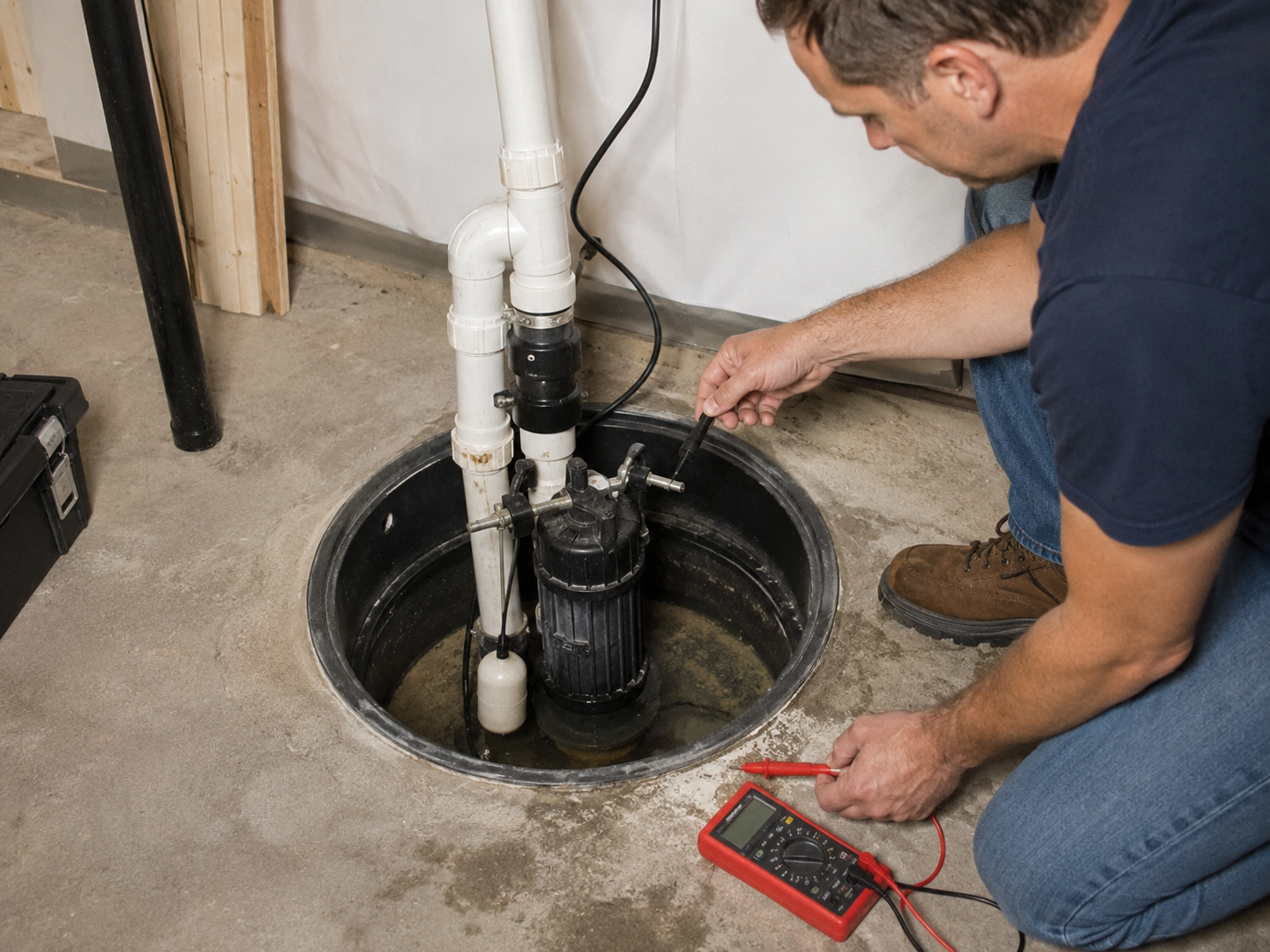
Sump pump failing Lafayette IN is a serious concern for homeowners who rely on their basement or crawl space pump to move water away from the home. A sump pump is easy to forget when it is working properly. The problem is that many homeowners only discover a failure after heavy rain, standing water, a wet basement floor, or a pump that no longer turns on when the pit fills.
Thank you for reading this post, don't forget to subscribe!A sump pump does not have to be completely dead to be failing. It may run constantly, make unusual noise, short cycle, vibrate, smell hot, fail to move water, or struggle to keep up during storms. These warning signs matter because the pump’s job is to remove water before it creates moisture damage, flooring problems, stored-item damage, or mold concerns.
This guide explains how to tell when a sump pump may be failing, what symptoms homeowners should watch for, when repair may be enough, and when replacement or installation of a new system makes more sense. The goal is to help Lafayette homeowners catch sump pump problems before the next heavy rain exposes the issue.
Quick Answer
A sump pump may be failing if it does not turn on when the pit fills, runs constantly, makes grinding or rattling noises, cycles on and off too often, smells hot, has visible rust, or runs without moving water out of the pit. These signs should not be ignored, especially before rainy weather.
If the pump is still fairly new and the issue is a float switch, clogged discharge line, loose connection, or minor component problem, sump pump repair service in Lafayette may be the right next step. If the pump is old, undersized, unreliable, or has failed more than once, sump pump installation for basement protection may be the better long-term option.
Why a Working Sump Pump Matters
A sump pump helps move water out of a sump basin before the water rises high enough to affect the basement or crawl space. In many homes, the pump works quietly in the background. It may only run during heavy rain, snowmelt, or periods when groundwater rises around the foundation. Because it is not used every day like a sink or toilet, problems can go unnoticed until the system is needed most.
FEMA explains that sump pumps direct groundwater away from the home through drainage pipes and are useful for homes that experience flooding caused by rain. Homeowners can review FEMA sump pump maintenance guidance for general flood-prevention awareness.
The risk is not only visible standing water. Moisture in a basement can affect stored belongings, drywall, flooring, trim, framing, and indoor air quality. The EPA’s mold and moisture guidance for homeowners emphasizes that controlling moisture is important for reducing mold problems. That is why sump pump performance is not just a convenience issue. It is part of protecting the lower level of the home from water-related damage.
For Lafayette homeowners, the best time to think about the sump pump is before the next storm, not during it. A quick test, visual check, and professional evaluation can make a big difference if the pump is already showing signs of trouble.
Sump Pump Failing Lafayette IN: 7 Urgent Signs
Sump pump failing Lafayette IN warning signs often appear before the pump completely stops working. The first urgent sign is a pump that does not turn on when water rises in the pit. This may point to a power issue, failed float switch, stuck float, bad motor, or another electrical or mechanical problem.
The second sign is a pump that runs but does not lower the water level. If the motor is running and the water is not moving, the discharge line may be clogged, the impeller may be blocked, the pump may be weak, or the system may be discharging water incorrectly. This is a serious problem because the pump can sound active while still failing to protect the basement.
The third sign is constant running. A sump pump should not run nonstop under normal conditions. Continuous operation can happen when the float switch is stuck, the pump is undersized, groundwater is entering rapidly, the check valve is failing, or water is flowing back into the pit after discharge.
The fourth sign is short cycling. This means the pump turns on and off repeatedly in a short period of time. Short cycling can wear out the motor and may point to float switch problems, basin sizing issues, discharge problems, or water returning to the pit.
The fifth sign is unusual noise. Grinding, rattling, humming, banging, or vibrating sounds should be checked. Some vibration is normal when a pump runs, but loud or new sounds may point to worn parts, debris in the pump, a loose discharge pipe, or a failing motor.
The sixth sign is visible rust, corrosion, or heavy buildup. A pump sitting in a damp pit can develop mineral deposits, debris buildup, or corrosion over time. These issues can affect moving parts and reduce reliability.
The seventh sign is water near the pit, damp basement flooring, musty odors, or moisture where the area is usually dry. These are not always caused by the sump pump alone, but they are important clues. If the pump is not keeping up, water can rise, seep, or remain in places where it should not be.
Helpful answer: If your pump is noisy, constantly running, cycling too often, not turning on, or not removing water, it should be checked before the next heavy rain.
Common Causes of Sump Pump Failure
Sump pump failure can happen for several reasons. One of the most common is float switch trouble. The float switch tells the pump when to turn on and off based on the water level in the pit. If the float gets stuck against the pit wall, tangled, blocked by debris, or mechanically worn out, the pump may not activate at the right time.
Power problems are another major cause. A sump pump depends on electricity unless it has a backup system. If a storm causes a power outage, the pump may stop working right when water is entering the basin. A tripped breaker, loose plug, bad outlet, or electrical issue can also stop the pump from running.
A clogged discharge line can also create problems. The pump may push water out of the pit, but if the discharge path is blocked, frozen, crushed, or improperly sloped, water may not leave the system correctly. In some cases, water can flow back into the pit, causing the pump to run more often than it should.
Debris in the pit can affect performance. Dirt, small stones, sediment, and loose material can enter the basin and interfere with the pump. Over time, buildup can reduce efficiency or damage components. A pump that sits crooked or is installed without proper clearance may also struggle.
Age matters too. Like any mechanical equipment, sump pumps do not last forever. Older pumps may become weaker, louder, slower to activate, or less reliable. If the pump has already failed once, needed multiple repairs, or cannot keep up during moderate rain, replacement may need to be discussed.
Installation problems can also contribute to failure. An undersized pump, missing check valve, poor discharge location, incorrect basin setup, or improper pipe routing can create repeated issues even if the pump itself is not very old.
Sump Pump Repair vs Replacement
Homeowners often ask whether they should repair the existing pump or install a new one. The answer depends on the pump’s age, condition, repair history, and the type of problem. A repair may make sense when the pump is relatively new and the issue is limited to a switch, check valve, discharge problem, loose connection, or minor obstruction.
Replacement may be a better choice when the pump is older, unreliable, undersized, heavily corroded, or showing signs of motor failure. If the pump runs but does not move water well, fails during storms, or has needed repeated service, installing a new pump can provide more confidence than continuing to patch an aging system.
Repair may also be less practical when the pump’s performance no longer matches the home’s water conditions. If the pit fills quickly during rain and the pump struggles to keep up, the issue may not be a single broken part. The home may need a stronger pump, a better setup, a backup pump, or improvements to the discharge system.
There is also a timing factor. If the pump shows warning signs before rainy weather, homeowners have more flexibility to schedule repair or replacement. If the pump fails during a storm, the situation can become urgent quickly. That is why it is better to address symptoms early.
Helpful answer: For sump pump failing Lafayette IN, repair may be enough for a simple component issue. Replacement may be smarter when the pump is old, unreliable, weak, or not keeping the basement protected.
How Homeowners Can Test a Sump Pump Safely
A basic sump pump test can help homeowners notice obvious problems. First, make sure the pump is plugged in and the cord is in good condition. Check the pit for visible debris. The float should be able to move freely without rubbing against the pit wall or getting caught on anything.
One common test is to pour water slowly into the sump pit until the float rises and activates the pump. The pump should turn on, remove the water, and then shut off after the water level drops. If it does not turn on, turns on late, runs without lowering the water, or does not shut off, there may be a problem.
Listen while the pump runs. A smooth motor sound is better than grinding, rattling, buzzing, or loud vibration. Watch where the water goes if the discharge point is visible. Water should move away from the foundation and should not immediately return toward the home.
Do not reach into the pit while the pump is operating. Do not handle electrical connections with wet hands. If anything looks unsafe, smells hot, sparks, trips a breaker, or creates concern, stop testing and call a professional.
Homeowners should also check the system after major storms. If the pump ran heavily, look for signs that it kept up with water entering the pit. A pump that barely handled the last storm may not handle the next one if conditions are worse.
When a Backup Sump Pump Makes Sense
A backup sump pump can be useful for homes where basement water would create serious damage or disruption. The main pump may work well under normal conditions, but a power outage, mechanical failure, or sudden inflow of water can still create risk. Backup systems are designed to provide extra protection when the primary pump cannot do the job.
Battery backup pumps are common because many pump failures happen during storms, when power outages are more likely. A battery backup system can help move water if the primary pump loses power. Some homes may need a secondary pump because water enters the basin quickly and the main pump needs help during heavy inflow.
A backup pump does not replace regular maintenance. It should be tested and checked just like the main pump. Batteries age, connections can loosen, and backup systems can fail if ignored. Homeowners should understand how the system works and what warning alarms mean.
A plumber can help determine whether a backup pump makes sense based on the home’s basement layout, water history, sump pit setup, and risk tolerance. For some homes, a backup system is a practical investment. For others, repairing or replacing the primary pump may be the first priority.
When to Call a Plumber
Call a plumber when the sump pump does not turn on, runs constantly, makes new loud noises, or fails to remove water from the pit. Also call if the pump cycles rapidly, the breaker trips, the discharge line appears blocked, or the basement has moisture even though the pump is running.
Professional evaluation is also important when the pump has failed before. A repeated failure may be caused by the pump itself, but it may also be connected to the basin, discharge line, check valve, power supply, or installation setup. Replacing the pump without addressing the surrounding issue may not solve the full problem.
Homeowners should also call before leaving town during rainy seasons if the pump has been acting unusual. A pump that is already making noise or struggling may fail while no one is home. Testing and service before travel can help reduce that risk.
If water has already entered the basement, stop using unsafe electrical devices in the wet area and avoid walking through standing water if electrical hazards may be present. The first priority is safety. After that, the pump and plumbing system should be checked to identify why the water was not removed properly.
Some sump pump issues can connect to broader plumbing concerns. If moisture, leaks, or drainage issues appear in other parts of the home, local plumbing repair help may be needed. During cold weather, homeowners should also watch for discharge line freezing or pipe issues that may require frozen and burst pipe repair in Lafayette.
Helpful answer: If sump pump failing Lafayette IN describes your home before a storm, schedule service as soon as possible. Waiting until the pit overflows can make the problem more expensive and stressful.
How to Reduce the Chance of Sump Pump Problems
Homeowners can reduce sump pump problems by checking the system regularly. The pump should be upright, plugged in, and free from obvious debris. The float should move freely. The pit cover should be secure if the system has one. The discharge line should move water away from the foundation and should not be blocked by leaves, dirt, ice, or damage.
It is also helpful to test the pump before heavy rain seasons. Waiting until the pump is already under stress can make problems harder to manage. A simple water test can show whether the pump activates, removes water, and shuts off correctly.
Keep the area around the sump pit accessible. If storage boxes, tools, or household items block the pit, it can be harder to inspect or service the pump quickly. Avoid letting debris fall into the basin.
Pay attention to changes. A pump that suddenly sounds louder, runs longer, or cycles more often is giving you information. Those changes may point to a developing issue. Calling early is usually better than waiting for a full failure.
Finally, make sure roof drainage and grading around the home are not sending unnecessary water toward the foundation. A sump pump helps remove water that reaches the basin, but reducing water around the foundation can help lower the workload on the pump.
Frequently Asked Questions
How do I know if my sump pump is failing?
Your sump pump may be failing if it does not turn on, runs constantly, short cycles, makes unusual noise, smells hot, has visible corrosion, or runs without lowering the water level in the pit.
Should I repair or replace my sump pump?
Repair may make sense for a newer pump with a minor issue, such as a stuck float or clogged discharge line. Replacement may be better if the pump is older, unreliable, weak, corroded, or has failed more than once.
Why is my sump pump running constantly?
A constantly running sump pump may have a stuck float, failed check valve, heavy groundwater inflow, undersized pump, blocked discharge line, or water returning to the pit. It should be checked because constant running can wear out the motor.
Why does my sump pump hum but not pump water?
A humming pump that does not move water may have a stuck impeller, motor issue, blockage, or mechanical failure. Turn it off if it appears unsafe and call a plumber for evaluation.
How often should I test my sump pump?
Homeowners should test the sump pump periodically, especially before rainy seasons or when heavy rain is expected. A basic water test can help confirm that the pump turns on, removes water, and shuts off properly.
Do I need a backup sump pump?
A backup sump pump may make sense if your basement has a history of water problems, if power outages happen during storms, or if water damage would be costly. A plumber can review your setup and explain whether a backup system fits your home.
Conclusion
Sump pump failing Lafayette IN is not something homeowners should wait to address. A pump can show warning signs before it fully stops working, including constant running, short cycling, unusual noise, failure to activate, or running without moving water. These symptoms are especially important before heavy rain.
A working sump pump helps protect the basement or crawl space from water problems, moisture concerns, and disruption. Repair may be enough for a minor component issue, but replacement may be the better choice when the pump is old, weak, unreliable, or not keeping up with water entering the pit.
Lickity Split Plumbing helps Lafayette homeowners evaluate sump pump problems, repair failing components, and install new sump pump systems when replacement is the more practical option. If your pump is acting unusual, testing poorly, or struggling to remove water, scheduling service before the next storm can help protect your home from a preventable basement water problem.
